
Goals are Not Just for Sports

In school and at work, we are often told to create goals and to strive to reach them. After all, achieving our goals is a measure of success and a method of how to pursue our dreams. Goals are a big part of managing marketing and sales in most companies, and they are the markers of who is producing and who is not. Not everyone has the same training in hitting goals, however, nor do goals create motivation for everyone.

What Can We Learn from Goals in Sports?

The easiest way to demonstrate goal setting is to look at sports. Every sport’s goal is to win. Goals can be achieved through hitting a ball out of the park, into a net, throwing it into a basket, or even by racing to a finish line. Most of these goals are made from years of preparation, training, and study of the game they represent. No athlete achieves success without that training, no matter how easy the achievement looks to the spectator. Athletes work through injuries, bad days, failures, and practice. Achievements are the culmination of hours and hours of work.

Obstacles

The point of a goal is to help you achieve success even with the stumbling blocks and barriers that stand before you. A goal is a guiding light to keep you on your journey or path. Henry Ford said that “Obstacles are those frightful things you see when you take your eyes off your goal.” The obstacles will always be there to keep you from making the goal. You may not have the experience, the education, or the opportunities that your peers or competitors do, however, you can still achieve your goals if you are willing to keep working towards them.

Applying Goals to Business

Like sports, business goals can be short-term or long-term. For instance, you can have a goal of getting ten items completed by the end of your work day. A long-term goal is becoming the top business in your category in the city by 2020. The key is establishing goals that are reachable, measurable, and trackable so that you can follow your progress as you work towards the goal.

While wanting to be the best business in the city by 2020 is possible, a more reasonable goal is to triple your income from your business by 2020. With this goal, you can create the steps that will lead to the goal, and measure your progress as you continue your journey. You will know when you hit your goal by the numbers you achieve without any arbitrary or ambiguous measurements.

How to Keep Your Goals in the Forefront of Your Mind

Weekly meetings to keep everyone on your team on track may be boring, but their function is to make sure the team members are still striving towards group goals. You can do the same with your personal business goals. Remind yourself daily what goals you are working towards and what you need to accomplish that day to move in the right direction. Remember that keeping your eyes on the goal will help to remove the obstacles.
Failure Is an Opportunity: The Positives That You Can Learn From a Good Day Gone Wrong

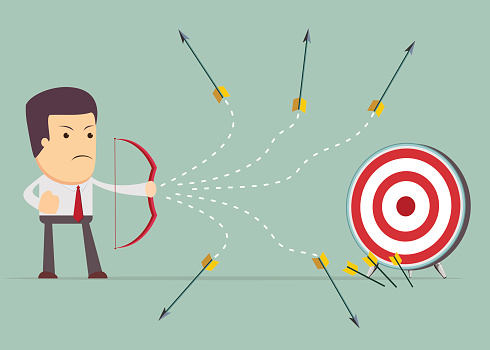
Nobody ever plans on failure. When you wake up in the morning, ready to start another rough day at the office, you don’t think to yourself "Oh boy, I really can’t wait to screw up that big project today." Failure is something that tends to happen, despite the best of intentions. In those moments of darkness, it’s easy to let setbacks both large and small get you down. However, a quality that all real leaders have in common is that they don’t dread failure at all because they know that it is inevitable. Failure is only truly a negative thing if you fail to seize the opportunity of the unique learning experience you’ve just been presented with.

Failure Helps You Combat Momentum

One of the most common reasons why failure sometimes rears its ugly head has to do with something that can often be your biggest strength – momentum. As the machine that is your business grinds along, day after day, you begin to get into a "groove" thanks to our old friend momentum. Productivity is on the rise; you’re producing adequate results, and you’re well on your way to meeting your deadlines and satisfying clients. Then, disaster strikes. Maybe a finished product isn’t nearly where you need it to be, or a mission-critical process has broken down. This is where momentum works against you sometimes – because you were riding the wave of that groove, you likely overlooked small problems earlier on before they had the chance to become much bigger ones in the present day.

This is where failure becomes your best friend – it forces you to stop and think about everything that led to this moment. What along the way caused the failure that you’re experiencing right now? It likely wasn’t anything that happened this morning, or last night, or even earlier in the week. It was probably a series of small decisions made weeks or even months ago that snowballed into your present situation. With failure, you have an opportunity to look back and see things in a much clearer way. You can make a note of certain decisions you made that didn’t quite pay off in the way you thought they would and, as a result, are ones that you’re not going to make again in the future (or at least you shouldn’t).

The Benefit of Hindsight

An old saying tells us that hindsight is 20/20. Many people think this is an ironic statement – because you can’t go back in time and change the past. You’re forced to live with the knowledge that the failure you’re experiencing is one you created yourself. Instead, look at this saying as a positive thing. Hindsight may not allow you to change the past, but it IS a powerful tool that you can use to positively impact the future. This is the core of what learning from failure is all about.

Think about it this way: your mistake may have cost your business X number of dollars today, but it also helped you save a much larger amount of money on an ongoing basis because you had a rare chance to learn and improve in a way that wouldn’t have presented itself otherwise. Learning from failure, therefore, becomes incredibly positive, as you’re investing in the future of both your company and your career with the lessons you’ve learned today.

These are just a few of the reasons why failure is only a negative thing if you allow it to be. Sure, you had expectations that you’ve set for yourself and others that you didn’t meet – feeling disappointed or even upset in these moments is natural. But failure is nothing if not a great opportunity to stop, reassess, and bounce back even stronger. Failure is natural throughout all points in life. In biology, every time you exercise your muscles begin to break down. However, they then rebuild themselves stronger than they were before – this is how we get more fit. There is absolutely no reason why the same shouldn’t be true in the world of business.

How to Stay Productive When You’re the Boss

From a certain perspective, employees have it relatively easy. They don’t have a choice regarding what type of work they’re doing or when they’re doing it. Productivity is dictated not only by the company they work for but by the people they answer to.

When you’re the boss, however, you aren’t quite so lucky.

When you’re the person in charge of steering the ship, there WILL be days where being productive seems impossible, regardless of how hard you try. If you want to be able to stay as creative and as productive as possible, even when you don’t have to answer to anybody but yourself, there are a few key things you’ll want to keep in mind.

It’s All About Momentum

Staying productive when you’re the boss may require you to think about things a bit differently from how you’re used to. One of the most valuable assets that you have on your side will be momentum, but unfortunately, that driving force isn’t just going to create itself.

Say you have a big task ahead of you that needs to be completed by a specified date. When you look at it as a single goal, it can understandably seem insurmountable – particularly if you have nobody to answer to but yourself. However, if you were to break it down into a number of smaller, more straightforward tasks, suddenly you’re building the type of momentum that will carry you far.

Start by making a list of all the more minor things you need to accomplish that will eventually add up to your singular large goal. It’s important that you don’t try to keep a record of this in your head – write it down on a piece of paper or in a word document on your computer. (Workflowy.com is what I use.) Doing so will help you visualize both what needs to be done, and the forward progress that you’re making. Turn every task less into something that needs to be done and more into a single problem that you need to solve. As you do, physically check each item off the list.

The benefit of this method is that you can SEE how much you’re accomplishing, even if you haven’t technically completed that one larger goal yet. Every time you cross off another task, you’re building a little bit of momentum that will drive you forward to the next waypoint. Before you know it, all of those small individual items that seem insignificant by themselves will add up to the proverbial end zone that you were working towards in the first place. You’re not doing any more or less work – you’re just shifting the way you think about the task at hand when you don’t have anyone to look to for motivation other than yourself.

Slow and Steady Wins the Race

Creativity is the same way. Instead of looking at something as a single, big task to be completed, be it a piece of creative material or a catchy new slogan for your business, look at it as a series of small puzzles to be solved. Visualize the amount of work to be done and the amount of progress you’ve made thus far. Before you know it your creative problem will be solved, even if you weren’t necessarily feeling creative yourself along the way.

For those days where creativity seems fruitless and remaining productive seems all but impossible, remember a very mere fact of the business world that you’ve likely forgotten. Even though you’re the boss, you DO have someone that you’re answering to, the client. Put yourself in the mindset of one of your employees – what would you tell them if they were supposed to turn in that big project but didn’t because they just weren’t "feeling creative enough"? You’d say "too bad – it’s too important, it needs to be done." Because the work IS too important and it DOES need to be done. As the boss, it isn’t so much that you’re answering to someone (in this case, the client), but more that someone genuinely depends on you. It’s your job not to let them down in any way possible.

Managing Change Effectively

There is no question that people do not like change. Although some people can adjust more readily than others, it is inherent in our nature that managing change on any level is difficult.

When it comes to business, change is inevitable. However, with each change, it becomes necessary to follow a transition process to acclimate both employees and customers. A transition can be the cause for issues to crop up in any area of your business. At a minimum, it can cause whining, grumbling and potential mistakes from your staff.

The Need for Innovation

Innovation and creativity are two of the most important factors that make your business a premier vendor for your customers. How you and your staff interact with customers and how you provide the best products and services to them will nurture loyal customers and make their lives better. While your techniques and results may change, your values do not, and that is what your customers will come to expect from you.

Creativity is Evergreen

Your ability to create, or to help your customers create, is a valuable talent. Managing change offers you an opportunity to find new ways to develop and display your "wares." Since change requires learning and developing new skills, people that go through any transition can stimulate their creative centers at the same time they are learning.

How to Manage Change Effectively

To help your employees, customers, and yourself manage change in a positive manner, look for ways to reward people who make the transition effectively.

1. Use change to retrain staff on necessary skills and review their knowledge.
2. Offer incentives for staff to display their new knowledge and expertise to customers.
3. Offer discounts to customers who try your newest innovation.
4. Take the change in stages that make sense for the involved participants.
5. Explain why you are making the change and how it will improve your product, your operations, or grow your business.
6. Give staff and customers a forum to voice their opinions and complaints.
7. Thank people for trusting you and making the effort to try something new.
8. Express your understanding of resistance to change.

As you ask your people to take the steps to change, remind them of how far your business and industry has come and where you would be if you never made any changes.

Pointless Meetings Or Wasted Opportunities?

If you ask any business professional what they dread on their calendar the most, many of them would tell you the same thing: all of those pointless meetings. You’d be hard pressed to find someone who hasn’t been pulled away from their desk at the most inopportune time, only to sit in a room and hear people convey information that they either already knew or that they didn’t need to know in the first place.

The dirty little secret here is that there are NO pointless meetings in the world of business – only wasted opportunities to get things done. If you want to make sure your meetings are justifying their existence, you’ll want to keep a few key things in mind.

Know When to Schedule a Meeting and When Not To

The first step on your road to a more productive meeting schedule involves coming to an understanding of what type of information should be conveyed in a meeting and what would be better left for some other delivery mechanism. One of the reasons why meetings tend to fall into the "pointless" category for many people is that they don’t require input or collaboration. If a team leader wants to draw everyone together to talk about updates to a project, but they don’t want the advice of anyone else, what they’re scheduling is not a meeting at all. It is an email at best.

Collaboration and the input of everyone involved should be a requirement for any meeting to justify its existence. If a particular problem has cropped up with a project and everyone needs to come together to solve it, that’s one thing. However, if the purpose of the meeting can be accomplished by just sending a memo or some other form of communication, don’t waste everyone’s time by gathering the entire team together to talk about the work they are already doing. Instead, let the team just get on with doing their jobs.

It’s All About Solutions and Focus

Another one of the reasons why more meetings tend to be less than productive is because people come with ideas, not solutions. One sure-fire way to make sure that nothing gets done is to allow people to come to a meeting and say off the top of their heads whatever is on their minds, firing off ideas that may or may not work.

In a perfect world, everyone at the meeting would know that you have a problem and would come prepared with X, Y, and Z suggestions for how to feasibly solve it. You wouldn’t waste the meeting time searching for an answer to your problem. Instead, you would be able to pick the best solution available to you from what the team members came prepared with and brought to the meeting. Far too many meetings lack this type of targeted focus, which is why so many of us can walk out of a meeting and feel like it accomplished nothing.

Bottom line, there are no pointless meetings in the world of business or, at least, there shouldn’t be. Getting everyone together for a meeting can be a great thing. Everyone is in a room together, feeding off of everyone else’s energy and building a solid foundation of creativity that will carry your business forward. Meetings that are little more than lectures have no place in a productive organization. If you want to have a meeting, by all means, do so – just make sure it has a clear focus before you schedule it.

5 Psychological Triggers To Convert Prospects To Clients

Any marketer worth anything will tell you that the key to increasing sales is to use A/B testing to determine which sales tactic is more successful than another. If you’re not familiar with it, A/B testing is comparing two versions of something to see which one performs better. With that in mind, have you ever wondered why some tactics are more successful than others?

Logically, we think that if we appeal to the rational brain, we will convince people that our product is the best possible product for their needs. However, if that were the case, would anyone ever buy a Pet Rock? Nope.

Unless you’re selling to Mr. Spock, there’s a much simpler way of convincing people to buy what you’re selling. The key to turning prospects into clients is tapping into the deeply embedded emotions inside each one of them.

By identifying these emotions and learning how to trigger them, you can increase your revenue faster than you can say "Chia Pet." Here are the top 5 psychological triggers you can start using immediately to boost your bottom line.

1. Increasing Pleasure and Avoiding Pain

Avoiding pain and increasing pleasure are the driving forces of all human activity. This idea is the most fundamental reason we have a nervous system. If something hurts, we find a way to stop it. If something feels pleasurable, we do it more.

Translating this into your marketing strategy, you must first identify what your clients associate with pain and pleasure. Once you’ve figured that out, the rest is easy. Draft your marketing message in a way that shows your customers how your product or service will get them as close as possible to their pleasure trigger and away from their pain trigger.

2. Simplifying Life

For most of us, life is complicated. Too complicated. It takes 47 steps to get us from the comfort of our beds and out the door prepared to work. We don’t need another product or service that will add more steps (obstacles) to our day.

Take a good, hard look at what you’re selling. Does it add or remove barriers from people’s lives? If it’s not easy and fast to use, consider making a few tweaks that will take all of the "no’s" out of the equation.

3. Creating Novelty

New and shiny are what we love. In fact, it has been scientifically shown that exposure to something novel increases the amount of dopamine in the brain, that chemical that makes us all tingly and excited.

If you’ve ever heard someone complaining about the lack of significant changes in the latest iPhone, but still stand in line for hours to get one in their hot, little hands on release day, you’ve witnessed the power of novelty.

You can easily create innovation with your products by making a few simple changes and give your prospects that shot of dopamine they’ve been craving. Think googly-eyes on the pet rock.

4. Telling a Story

Humans have evolved over hundreds of thousands of years by telling stories. It’s how we share our experiences. The best storytellers invoke all of the senses to put their audience directly into the action.

You can infuse even the most mundane products with the magic of a good story. Try updating your copy to tell a story about your product that transports your prospects to a happier, more memorable place. They’ll buy just to keep the story alive.

5. Building Anticipation

We’ve all turned 16 at some point in our lives. Remember the anticipation we felt as the day drew nearer and the prospect of being able to drive around without an adult sat winking at us in the distance? It made life a little more sparkly, didn’t it?

If you’ve got a new product or service in the works, don’t just plunk it down on the counter when it’s all done. Start building some buzz while you’re still working on it. Send out emails to your current customers and prospects. Create a series of videos giving out little bits of information at a time. Get people in that "I can’t wait" mode and your launch day will be more profitable than you can imagine.

4 Trends Affecting Small Businesses This Year

Business owners tend to spend a lot of time searching the magic oracle (a.k.a. the internet) for answers to business growth questions. How do I get new customers? How do I get existing customers to come back? Fear not, we’ve identified 4 business trends you should be paying attention to this year.

JOBS Act Crowdfunding Investment Opportunities

Not everything in business is free. The JOBS Act: Title III was recently released and what that means for you is that your business can raise investments through crowdfunding, even from non-accredited investors. If you’re in the market to increase your market share, consider checking out sites like Crowdfunder.com or Equitynet.com.

Rapid Delivery Systems

You’ve probably heard by now of rapid delivery and logistics systems like AmazonFlex and UberRUSH. Society is moving rapidly to an on-demand world, capitalizing on an economy of shut-ins, or more likely, extremely busy people. If you are in the business of selling products, you can now easily integrate an entire network of delivery drivers to hand- deliver your goods to your customers’ doorsteps.

Cyber Security / Ransomware

Unless you’ve been living under a rock, you’ve undoubtedly noticed that the world is moving to the cloud. The rise of SaaS (Software as a Service) companies and the increasing value of information have turned the web into a hackers dream. They’re becoming more creative as well. Imagine coming into the office one day and finding that all of your files have been encrypted and a ransom note is in your inbox for the key. Your business could easily come to a crashing halt.

If you’ve never thought about cyber security or don’t know where to start, head over to the Federal Communications Commission and create a custom Small Business Cyber Planner.

Social Responsibility

Today’s consumer is becoming more socially aware and more socially active. They care about the world they live in and they expect the same from the businesses they patronize. Earn their respect and you will have dedicated clients for life. We’re talking more than just going green, though, although it’s always a great first start. The next step is to imagine ways in which your product or service could help reduce suffering, poverty, or climate change. Find an issue that resonates with you and your clientele and that finds a way to effect a little social change from within your company.

Innovation: Living Outside the Box Can Help Your Career

Gone are the days where to really make an impact in your career, you had to prove yourself to be the best worker out there. While having a strong work ethic and the determination to accomplish any task that you’re given are always important regardless of the business you’re talking about, these principles have been superseded in recent years by something more important: innovation.

According to a study conducted by Fast Company.com, employers are increasingly looking not at the surface-level work histories of applicants when hiring new employees, but at their history of innovation. Employers want critical thinkers because critical thinkers don’t just get the job done – they flip the job on its head and do it in a way better than anyone ever has before.

If you really want to use this idea to your advantage and lay the foundation for positive growth in terms of your career, it isn’t good enough to just think outside the box. You have to “live outside the box”.

Innovation and Your Career

Life is full of unpredictability. Emphasizing innovation throughout all aspects of your life doesn’t just make you more adept at dealing with change – it allows you to embrace change. It allows you to go beneath the surface of a situation and take anything you find, good or bad, and turn it into something that can help propel you forward.

If you’ve developed a reputation as an innovator, you instantly make yourself more valuable in most businesses because “innovation” and “saving money” are synonyms. Being an innovator means that you can use limited resources combined with your passion, your drive, and the sheer force of your creativity to not just solve a problem, but to accomplish something.

Innovation: Bringing it All Back Together Again

Innovators bring true value to a situation or environment. They’re not followers. They’re leaders. If you can truly train yourself to think with an eye towards innovation in everything you do, you’re creating the type of situation in your career where the definition of “success” doesn’t matter, as it will always be well within arm’s reach.

These are just a few of the reasons why making a constant effort to live “outside the box” is so important. In the short-term, it makes you a much more valuable employee who is able to solve challenges, and allows you to come up with creative solutions that allow a business to stand apart from the competition and more. In the long-term, it makes YOU a much more valuable commodity. By creating a situation where innovation is built into your very instincts, it teaches you how to naturally use ANYTHING that life may throw at you to your advantage.

Bringing Out the Best From Introverted Employees

As a business leader, one of the core requirements of your job is to make sure that you’re bringing out the absolute best in your team at all times. Every employee working under you not only needs to excel on their own terms but must also be contributing towards the larger whole at the same time. Having quiet, introverted employees can certainly make this difficult, but therein lies the challenge. If you want to use your leadership skills to bring out the best from your introverted employees, you’ll certainly want to keep a few key things in mind.

Work on Your Pace

One of the biggest mistakes you can make in terms of dealing with introverted employees is trying to force them to adapt to the way you like to work. Introverted employees typically don’t like fast-paced, high-stress situations. They need time to think, to plan, and to ultimately prepare for the task ahead. Part of the way you can help bring out the best in these employees involves embracing this idea wherever possible.

Say you’ve got a big meeting coming up and you know that an introverted employee will need to contribute as much as possible. Instead of springing this on them at the last minute, let them know as soon as possible. Give them time to get their thoughts straight and make sure you give them a clear, actionable agenda to work from. If you allow them to build up to the meeting, you’ll find that they’ll be much more engaged than you probably thought they would.

Acknowledge Accomplishments

One of the most important things to keep in mind about introverted employees is that they will rarely, if ever, take outward pride in their own accomplishments. They typically don’t like attention, even if it’s positive, which means that a lot of the hard work they’ve been doing will likely go unnoticed. As a result, it becomes your job to take pride in those accomplishments for them. If an introverted employee absolutely nails a project, make sure everyone on the team knows it. Make the announcement on their behalf, allowing them to feel great while embracing their personality at the same time. Just make sure you spread the love – all team member accomplishments should be acknowledged equally, both for introverts, extroverts, and everyone in between.

Use Technology to Your Advantage

Another factor to consider about introverted employees ultimately comes down to communication. An introvert doesn’t necessarily like to keep in constant contact either in person or by phone, but luckily, technology has made it easier than ever to adapt to this idea. Utilize virtual communication for projects when possible, either via text messages to your team or instant messaging conversations, e-mail threads and more. This will allow your introverted employees to not only contribute to a larger project but to do so in an environment they feel the most comfortable in.

Remember that just because someone is quiet and prefers to work in a solitary environment does NOT mean that they aren’t contributing. In the same way, a loud, boisterous attitude doesn’t make someone a good employee either. Your primary goal is to strike a balance. You need to provide ALL employees, regardless of their personality type, exactly what they need to thrive.

Succeed in Business: Lessons From a Sailor

Whether you’ve been in business for 40 years, or you are a startup waiting for the perfect time to enter the marketplace, you want to know how to succeed in the fast-paced world of capturing market share. Let’s see how your business can benefit from the lessons learned in the daily life of a salty sailor.

Sailors are known for their exciting tales of far-off worlds and adventure beyond a landlubber’s imagination. The trusted captain and crew have a few pointers to share for a successful voyage.

Know your vessel.

Is she seaworthy? Is she built and maintained by people who take pride in their work? What are her quirks? Not all vessels are the same by any means. Know what makes her unique and tend to those details. What is the greatest strength of your enterprise? What is your core competency, or what is the distinguishing feature of your product? Having a well-defined product or service and a good understanding of how it compares to similar items in the marketplace is crucial.

Choose a good crew.

Your crew will make or break the voyage, and as the captain, all the responsibility is resting on you. Is the "crew" of your "vessel" the best in the business, or did you hire your brother’s high school best friend out of some misplaced sense of obligation? You have to constantly assess the skill and knowledge of your crew. Do you have the right people stationed at the right post? Just as you wouldn’t put a deckhand in charge of navigation, you must insist on having all of your staff working in the areas of their expertise.

Know where you’re going.

As a sailor, you must always be aware of your latitude and longitude. You have to know where you are in order to chart a course to where you want to go. The tools available today are changing rapidly and technology is great, but do not lose sight of the basics: quality, consistency, value, and customer service. Knowing where you are in these key areas and how you stack up to the competition will allow you to get where you want to go, be it increased market share, growth, innovation, or profitability.

Sharpen your senses.

The wind will change direction and velocity and make your life terrible if you aren’t in tune with Mother Nature. The same goes for rain, thunderstorms, and squalls. Know what conditions are in the forecast, but always keep watch to discern subtle changes and patterns. Business journals and analysts are out there making predictions and it can be hard to figure out who has the best information. Sharpen your senses and your gut will guide you in the direction of success. Look at the forecast, but know that your gut is rarely wrong.

Know how to adjust your sails.

When the wind changes direction or a storm system builds, sailors understand that they’ll make no progress fighting the forces of nature. They know that by simply adjusting their sails, they can harness those forces, adjust their course, and continue on. They may even adjust their destination to make the most of the situation. Similarly, a leader of any enterprise must know how to adjust his plans to accommodate changes in the market. Market forces can be infinitely stronger than your iron will and can crush your business if you fight. If you accept the change and adjust your course, you may find yourself in a different place from where you intended to go, and it may be far better than you expected.

Whether you are a captain on the high seas or a captain of industry, you old salts have a lot in common. Next time you are in a pub near the marina, strike up a conversation with the weather-worn sailor in the corner. You just might learn something.